


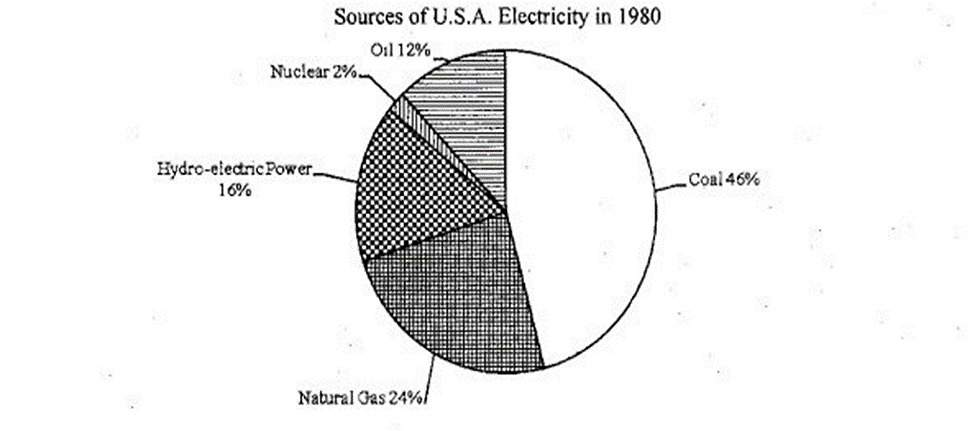
Sources of U.S.A. electricity in 1980 - Graph, Chart, Map, Diagram and Table Interpretation for HSC & SSC / The chart shows the sources of U.S.A. electricity in 1980

Dhaka Board 2017
Look at the chart. It shows the sources of U.S.A. electricity in 1980. Now, analyze the chart focusing the main aspects (At least in 150 words). 10
Sample Answer 1
The pie chart shows the different sources of electricity in the United States of America in the year 1980. It gives the exact percentages for five different ways to make electricity. Overall, it is very clear to see that coal was the most popular and important source of power. On the other hand, nuclear energy produced the least amount of electricity during that time.
Looking closely at the chart, coal was definitely the biggest source of power in the country. It was responsible for almost half of the total, providing exactly 46% of all the electricity. The second largest source was natural gas. This fuel created about a quarter of the power, which is exactly 24%. Together, coal and natural gas made up 70% of the entire electricity supply.
Moving to the smaller parts of the pie chart, hydro-electric power was the third most used source. Electricity made from water accounted for exactly 16%. Next, oil was used to produce 12% of the country's power. Finally, nuclear power was at the absolute bottom of the list. It was very rare back then, providing a tiny 2% of the electricity. In short, the USA depended heavily on fossil fuels like coal and natural gas in 1980.
Sample Answer 2
The provided pie chart comprehensively delineates the proportional distribution of various energy sources utilized for electricity generation within the United States of America during the year 1980. An overarching analysis of the visual data reveals a profound national reliance on traditional fossil fuels, with coal emerging as the unequivocally dominant contributor to the power grid. Conversely, alternative technologies, specifically nuclear energy, constituted a highly negligible fraction of the overall electricity production landscape.
Delving into the specific empirical figures, coal stood as the preeminent source of energy, single-handedly accounting for an overwhelming 46% of the total electricity generated, which is nearly half of the entire national supply. Natural gas represented the second most significant energy vector, capturing nearly a quarter of the distribution at precisely 24%. When aggregated, these two primary fossil fuels monopolized a staggering 70% of the American power sector.
Shifting focus to the secondary tier of energy providers, hydro-electric power constituted a respectable 16% of the total output. Petroleum-based oil trailed slightly behind, contributing exactly 12% to the national grid. Finally, residing at the absolute nadir of the spectrum, nuclear power generation was remarkably minuscule, responsible for a mere 2% of the total electricity supply, underscoring its nascent stage of development during that specific historical era.
Sample Answer 3
The segmented circular chart offers a detailed, proportional breakdown of the primary energy resources harnessed to generate electricity across the United States of America in the year 1980. From a holistic perspective, it is manifestly evident that the American energy infrastructure was heavily predicated on combustible carbon-based fuels, whereas nuclear technology remained an entirely peripheral contributor to the national power grid.
Focusing intently on the most prominent metrics, coal combustion served as the absolute pinnacle of electricity production, securing a formidable 46% share of the overall energy portfolio. This massive figure was nearly double the contribution of the subsequent category. Natural gas constituted the second largest demographic, capturing a substantial 24% of the market. Consequently, these two conventional fuels alone dictated nearly three-quarters of the country's entire electrical output.
Turning attention to the comparatively less dominant sectors, renewable generation via hydro-electric power commanded a 16% share of the total energy matrix. Oil-fired power plants maintained a slightly smaller footprint, satisfying exactly 12% of the national electricity demand. Ultimately, the sector of nuclear energy exhibited the lowest statistical metric on the entire chart. It accounted for an extraordinarily negligible 2% of the total supply, perfectly illustrating the sheer dominance of traditional fossil fuels during that particular decade.
Vocabulary List (A-Z)
Absolute - পরম / সম্পূর্ণ
Aggregated - সমষ্টিগত / একত্রিত
Alternative - বিকল্প
Breakdown - বিভাজন / বিশ্লেষণ
Combustible - দাহ্য / জ্বলনশীল
Combustion - দহন / পোড়ানো
Comprehensive - ব্যাপক / বিস্তৃত
Constituted - গঠিত / অন্তর্ভুক্ত
Contributor - অবদানকারী
Conventional - প্রথাগত / গতানুগতিক
Delineates - বর্ণনা করা / চিত্রিত করা
Dictated - নিয়ন্ত্রিত / নির্দেশিত
Dominant - প্রভাবশালী / প্রধান
Empirical - বাস্তব অভিজ্ঞতাভিত্তিক / প্রায়োগিক
Formidable - দুর্দান্ত / শক্তিশালী
Generation - উৎপাদন
Harnessed - কাজে লাগানো / নিয়ন্ত্রিত
Holistic - সামগ্রিক / পূর্ণাঙ্গ
Infrastructure - অবকাঠামো
Manifestly - সুষ্পষ্টভাবে / প্রকটভাবে
Matrix - কাঠামো / ছাঁচ
Metric - পরিমাপক / মাপকাঠি
Minuscule - অতি ক্ষুদ্র / নগণ্য
Monopolized - একচেটিয়া অধিকার করা
Nadir - সর্বনিম্ন বিন্দু / তলানি
Nascent - উদীয়মান / প্রাথমিক অবস্থার
Negligible - নগণ্য / উপেক্ষণীয়
Overarching - সামগ্রিক / সর্বব্যাপী
Overwhelming - অপ্রতিরোধ্য / বিপুল
Peripheral - প্রান্তিক / আনুষঙ্গিক
Pinnacle - চূড়া / শীর্ষবিন্দু
Portfolio - পোর্টফোলিও / কাজের তালিকা বা সংগ্রহ
Predicated - নির্ভরশীল / প্রতিষ্ঠিত
Preeminent - শ্রেষ্ঠ / সর্বপ্রধান
Profound - গভীর / তীব্র
Proportional - আনুপাতিক
Reliance - নির্ভরতা
Respectable - সম্মানজনক / উল্লেখযোগ্য
Segmented - খণ্ডিত / বিভক্ত
Spectrum - বর্ণালী / পরিসর
Staggering - বিস্ময়কর / হতবাক করার মতো
Subsequent - পরবর্তী
Substantial - যথেষ্ট / সারগর্ভ
Trailed - পিছিয়ে পড়া / অনুসরণ করা
Unequivocally - দ্ব্যর্থহীনভাবে / স্পষ্টভাবে
Utilized - ব্যবহৃত / কাজে লাগানো
Vector - বাহক / দিকমান রাশি (এখানে মাধ্যম অর্থে)


Comments